
Shin Splints & Plantar Fasciitis: What Are They (and How to Fix It)


If you've ever pushed through a nagging ache in your shin or winced at that first step out of bed, you're not alone. Shin splints and plantar fasciitis are two of the most common overuse injuries we see in the clinic, especially among runners, walkers, and anyone who's recently ramped up their activity as the cooler temps approach. They show up differently, but they share a lot of the same root causes. Here's what you need to know, and what actually helps.
Shin Splints (Medial Tibial Stress Syndrome)
What's happening: Shin splints develop when the muscles, tendons, and bone tissue along your shin get overloaded, usually from repetitive impact like running, or a sudden jump in training volume or intensity. Flat feet, flexible feet or high arches can make you more vulnerable, especially when paired with worn-out, restrictive or unsupportive footwear.
What it feels like: A dull, aching pain along the inner (or sometimes front) part of your lower leg, often worse at the start of activity, during activity, or the morning after.

Plantar Fasciitis
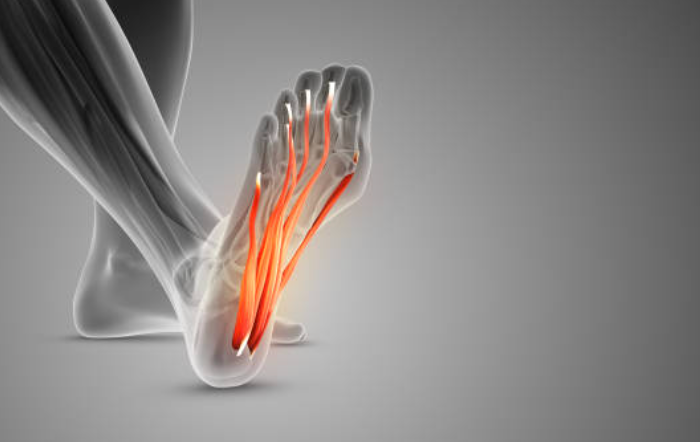
What's happening: The plantar fascia, a thick band of tissue running along the bottom of your foot, gets irritated from a sudden change in activity, limited ankle mobility, tight calves, or foot structure issues (flat feet, flexible feet or rigid high arches) that aren't well supported by your shoes.
What it feels like: The telltale sign is sharp pain with your very first steps in the morning or after sitting for a while. That "first step" pain happens because the fascia tightens up at rest and then gets stretched abruptly when you stand and load it.
The Common Thread
Notice the Overlap?
Both conditions tend to trace back to the same handful of culprits: doing too much too soon, tight or under-mobile ankles and calves, and feet that aren't getting the support they need. That's exactly why we don't just treat the painful spot, we look at the whole picture: your gait, your posture, your footwear, and how your whole body is moving together. Get to the root cause, and you stop the cycle of it coming back.
What Actually Helps
In the short term:
Modify activity, not eliminate it, pool jogging or cycling keeps your fitness up without the pounding
Ice or heat, whichever feels better for you
Ease up on mileage and let irritated tissue settle down
To rebuild and prevent recurrence:
Mobility: Improve ankle dorsiflexion and calf flexibility, tight calves are a major driver of both conditions
Strength: Build ankle dorsiflexion and plantar flexion strength
Foot intrinsics: Small but mighty, toe towel scrunches, toe yoga, and doming exercises retrain the tiny muscles that stabilize your arch
The right gear: We're big fans of our neighbors at Marathon Sports for proper sock, insert, and shoe fitting, the right footwear makes a real difference
Graded return: Progress gradually back to your goal mileage rather than jumping back in all at once
Condition-specific work:
Shin splints: Toe taps and heel walking to build strength through the front of the shin
Plantar fasciitis: Calf and plantar fascia stretching (standing gastroc/soleus stretch, strap stretch with knee straight and bent), self-massage, and progressive strengthening, starting with double-leg heel raises against resistance if needed, building toward single-leg heel raises

When to Come See Us
A little soreness after a long run is normal. Pain that lingers, changes how you walk, or keeps you sidelined is your body telling you something needs attention. At Padme Physical Therapy, we don't just hand you a generic stretch sheet, our therapists do a full functional assessment of your posture, gait, and movement patterns to find out why this is happening to you, not just where it hurts. Then we build a hands-on, individualized plan to get you back to running, walking, and living pain-free.
Ready to stop guessing and start healing? Schedule an appointment or consultation with our team today.
Padme Physical Therapy, holistic, individualized care to help you move, train, and live without limits.


